
The Supreme Court has sought a response from the Election Commission on a plea by Trinamool Congress MPs alleging irregularities in the revision of electoral rolls in West Bengal.
The Supreme Court of India has sought the government's response on a Public Interest Litigation (PIL) that challenges the appointment process of the Comptroller and Auditor General of India (CAG), arguing it's unconstitutional. The PIL, filed by the Centre for Public Interest Litigation, claims the current process, solely through executive appointment by the Prime Minister, undermines the CAG's independence and violates constitutional principles. The court, while acknowledging the importance of institutional trust, questioned the extent to which it should intervene in the appointment process and whether this would constitute rewriting constitutional provisions. The PIL suggests the CAG's appointment should be similar to other independent bodies, with a selection committee comprising the Prime Minister, Leader of the Opposition, and Chief Justice of India. The case has implications for the independence and transparency of India's audit system.

The Supreme Court of India has questioned the legal status of Rohingya refugees living in the country, raising concerns about providing resources to illegal entrants while Indian citizens face poverty.
A two-judge bench of the top court in 1981 questioned the correctness of the 1967 verdict holding Aligarh Muslim University not to be a minority institution since it was created by a central law and referred the issue to a larger bench for decision.
The Supreme Court has restrained lower courts from releasing the accused in a digital arrest fraud case where a 72-year-old lawyer was duped of Rs 3.29 crore. The court expressed concern over the growing cybercrime and the targeting of elderly citizens.
The Supreme Court of India has upheld an order directing NBCC to complete 16 delayed housing projects of Supertech Limited, providing relief to thousands of homebuyers who have been waiting for nearly two decades.
The Supreme Court of India has upheld an order directing NBCC to complete 16 delayed housing projects of Supertech Limited, providing relief to thousands of homebuyers who have been waiting for nearly two decades.
The Supreme Court of India has ruled that no timelines can be imposed on governors and the president to grant assent to bills passed by state assemblies, clarifying the extent of their powers under Article 200 of the Constitution.

The Supreme Court has directed the Maharashtra State Election Commission to complete the stalled local body polls by January 31, 2026, criticizing the commission for non-compliance with previous orders.

The Supreme Court has taken suo motu cognisance of the controversy surrounding the definition of Aravalli hills and is scheduled to hear the matter. The court had previously accepted a uniform definition and banned fresh mining leases in the area.
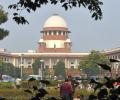
A Constitution bench comprising Chief Justice B R Gavai and Justices Surya Kant, Vikram Nath, P S Narasimha and A S Chandurkar, would fix the timelines on July 29 and commence hearing on the presidential reference in mid-August.

The Supreme Court criticized the Punjab government for making irresponsible statements regarding farmer leader Jagjit Singh Dallewal's indefinite fast and questioned the intentions of some farmer leaders. The court emphasized that it never directed Dallewal to break his fast but expressed concern for his health and urged medical aid. The bench expressed frustration over the government's attempts to create an impression that they were persuading Dallewal to end his fast, despite the court's directives to provide medical aid.
The Supreme Court has directed the Maharashtra government and its state election commission to conduct local body elections, clarifying that the results will be subject to the court's final verdict, especially concerning the 50% quota limit. The court will hear pleas regarding OBC reservation in local bodies in January 2026.

The Centre has argued before the Supreme Court that state governments cannot use writ jurisdiction to challenge the actions of the President and Governor regarding bills passed by state assemblies, particularly concerning fundamental rights violations. The President seeks the Supreme Court's opinion on whether states can file writ petitions under Article 32 and the scope of Article 361.
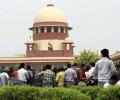
Four special benches will start functioning in the Supreme Court from next week to hear criminal appeals, direct and indirect tax and land acquisition matters and motor accident claim cases, Chief Justice of India Justice D Y Chandrachud said on Wednesday.

The Supreme Court is examining the extent to which courts can intervene when governors delay or refuse to act on bills passed by state assemblies. The court questioned the Centre on whether judicial review is barred in cases of gubernatorial inaction, sparking debate on the balance of power between states and the central government.

It said that when a retiree, who withdraws amounts in the range of Rs 10,000 or Rs 20,000, suddenly withdraws huge amounts, then the bank should issue an alert.
The Supreme Court has expressed serious concerns about the rise in digital fraud, particularly digital arrest scams, and has directed the central government to develop a standard operating procedure to combat these crimes.
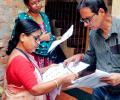
The Supreme Court expressed concern over threats to election officials in West Bengal and other states, urging the Election Commission to take action. The court also addressed the lack of cooperation from state governments in electoral roll revisions.

The Supreme Court is examining the validity of the Election Commission's decision to conduct special intensive revisions of electoral rolls in several states, focusing on concerns about democratic participation and the burden on ordinary voters.

The Supreme Court on Thursday held that the Governor can reserve a bill for consideration of the President even in the second instance, when the bill is again sent by the state assembly to him whether in its amended or unamended form.

The Supreme Court on Thursday refused to accept the preliminary objections raised by opposition-ruled states like Tamil Nadu, West Bengal and Kerala to maintainability of Presidential Reference, saying the issues raised in it pertain to the very core and foundational modalities of the constitutional machinery.
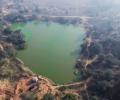
The Supreme Court has kept in abeyance its previous verdict on the definition of the Aravalli hills and ranges and proposed a high-powered committee to examine the issue.
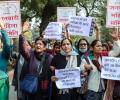
The Supreme Court on Monday stayed the Delhi high court's order suspending the life sentence of expelled Bharatiya Janata Party leader Kuldeep Singh Sengar in the 2017 Unnao rape case.
The Supreme Court expressed deep regret that the actual perpetrator of the Nithari killings was not established despite a prolonged investigation, while acquitting Surendra Koli in the last Nithari murder case.

Chandrachud said it should be ensured that courts provide safe and accommodating environment for all members of the society.
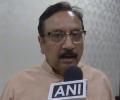
A bench of Justices Surya Kant and N Kotiswar Singh deferred the hearing on Shah's plea after his counsel and senior advocate Maninder Singh made a request.
The Collegium had proposed Justice Singh's transfer on August 3 for "better administration of justice".
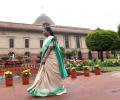
The Supreme Court of India has ruled that a governor has discretion under Article 200 to refer a state bill to the President or return it to the legislature, and is not bound by the advice of the council of ministers. The court clarified that a governor cannot simply withhold a bill.

The Supreme Court has directed states to consider deploying additional staff to ease the workload on booth level officers (BLOs) engaged in the special revision of electoral rolls, following concerns about extreme work pressure and related issues.
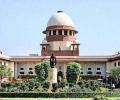
The Supreme Court of India has scheduled a hearing on February 19 for pleas challenging the appointment of the Chief Election Commissioner and Election Commissioners under the 2023 law. The court emphasized the potential consequences if any action is taken before the hearing. The pleas argue that the 2023 law, which excludes the Chief Justice of India from the selection panel, undermines the independence of the Election Commission and allows for undue influence from the executive branch. The court's earlier verdict in March 2023 called for an independent selection panel comprising the Prime Minister, Leader of the Opposition, and the Chief Justice of India to ensure the integrity of the Election Commission. The case highlights concerns about the independence of India's electoral process and the potential for political influence in the appointment of key election officials.
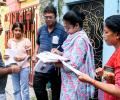
The Election Commission has defended its Special Intensive Revision of electoral rolls in West Bengal and Tamil Nadu in the Supreme Court, refuting allegations of mass deletion of genuine voters as exaggerated and politically motivated.
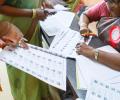
The Supreme Court declined to entertain a plea seeking a special investigation team (SIT) probe into alleged electoral roll manipulation in Bengaluru Central and other constituencies, advising the petitioner to approach the Election Commission of India.

The Supreme Court on Thursday upheld the constitutional validity of Section 6A of the Citizenship Act related to the grant of Indian citizenship to illegal immigrants in Assam by a majority verdict of 4:1.

The Supreme Court would likely hear on Wednesday a plea of Ashoka University's faculty Ali Khan Mahmudabad against his arrest for his social media posts over Operation Sindoor.
Ashoka University professor Ali Khan Mahmudabad, previously booked for social media posts, has petitioned the Supreme Court for the release of his passport, a condition of his bail. The court will consider the plea on November 18.

'My argument was straightforward: If the Constitution allows this reservation and SC/ST and OBC candidates are already getting reservation in private institutions -- backed by Constitution Bench orders -- then not extending the same to EWS candidates directly violates the 103rd Amendment and Article 14, which guarantees the right to equality.'
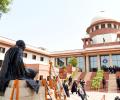
Calling itself the "custodian of the Constitution", the Supreme Court on Thursday asked if it could "sit idle" if a constitutional functionary like governor failed to discharge duties, as it reserved its verdict on the presidential reference on grant of assent to bills.
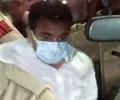
The Supreme Court on Monday gave bail to ex-Union minister Ajay Mishra's son Ashish Mishra in the case related to the 2021 Lakhimpur Kheri violence that claimed eight lives, and restricted his movement to Delhi or Lucknow.
The Centre informed the Supreme Court that a panel led by Prime Minister Narendra Modi is likely to meet on December 10 to select and recommend names for the post of Chief Information Commissioner and information commissioners of the Central Information Commission (CIC).
